





Profile
About
My research is on measuring and forecasting risk in financial markets: tail risk (Value at Risk and Expected Shortfall), information entropy, speculative bubbles and crashes, digital assets and energy markets.
More recently, I study how large language models and time-series foundation models can be used to forecast risk, partly in joint work with my PhD students and the partners of the MSCA Doctoral Network on Digital Finance.
Latest
News
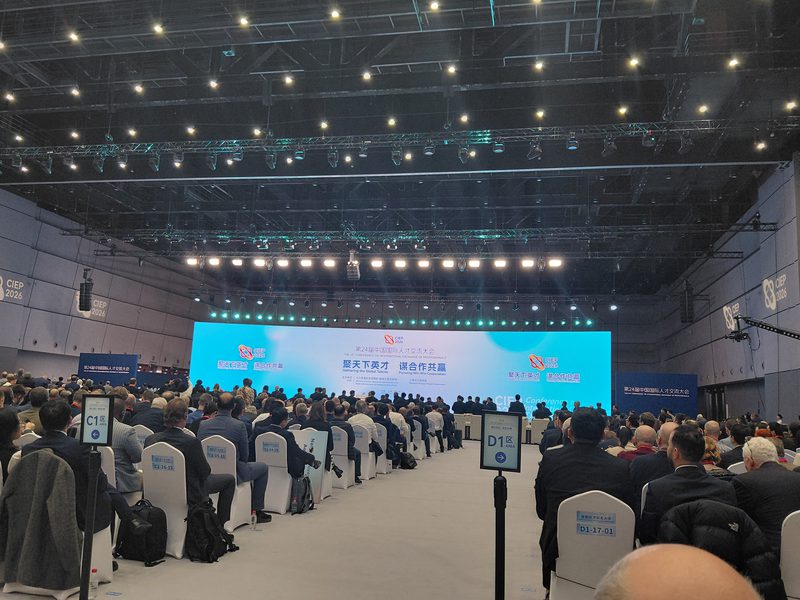
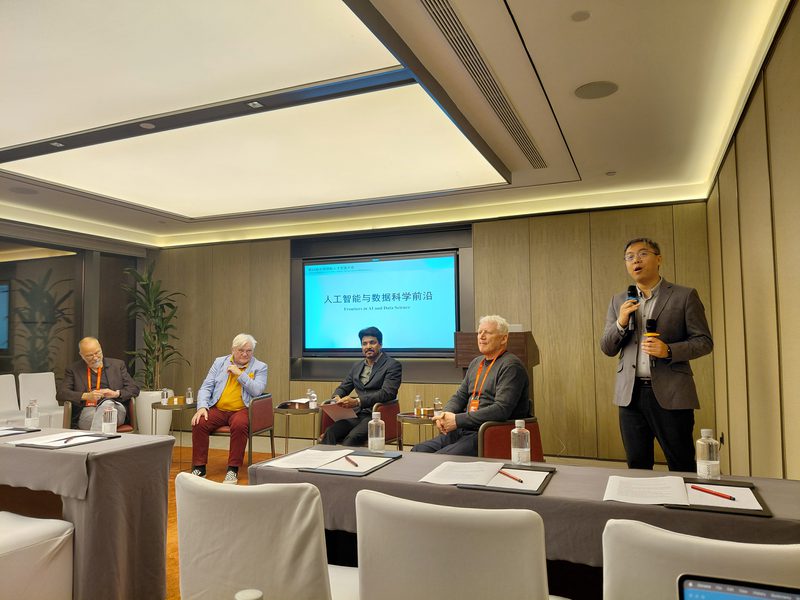
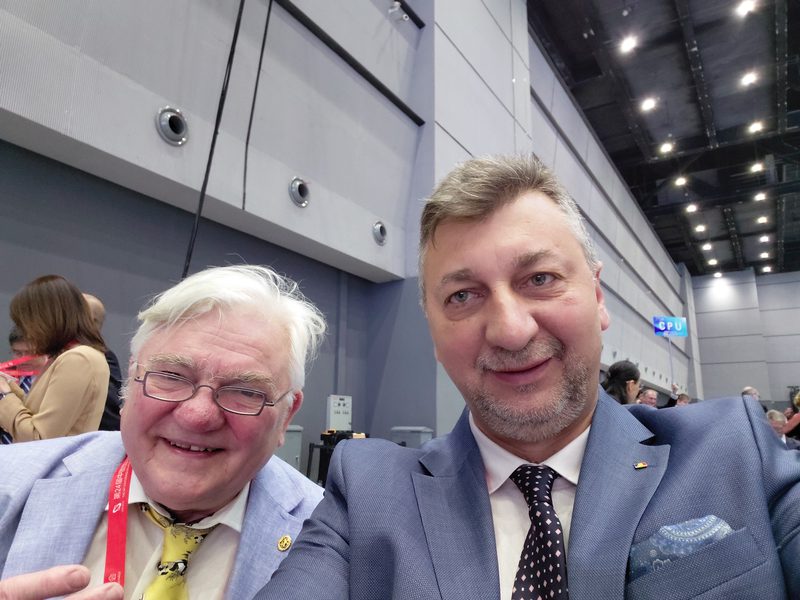
- Invited expert at CIEP 2026, the 24th Conference on International Exchange of Professionals (Shanghai), at the invitation of the Capital University of Economics and Business (CUEB, Beijing): roundtable “A Meeting of Minds” on AI and data science in finance, and the CUEB session on data science and the digital economy.
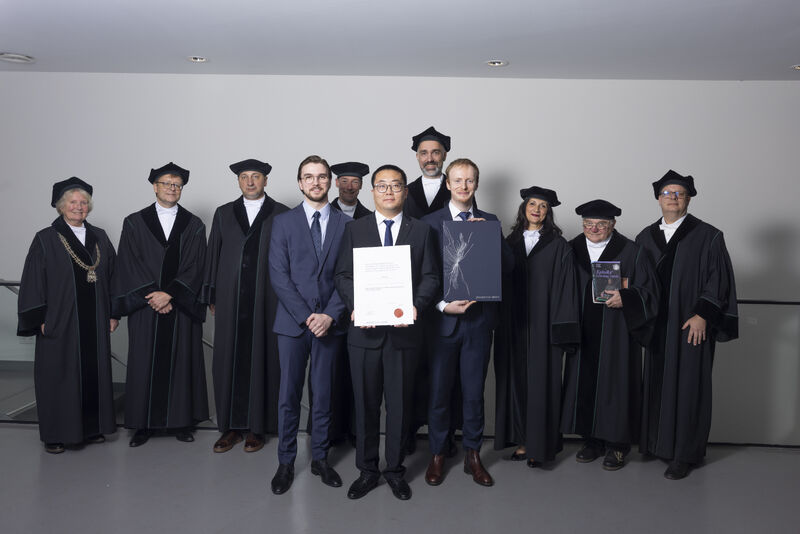
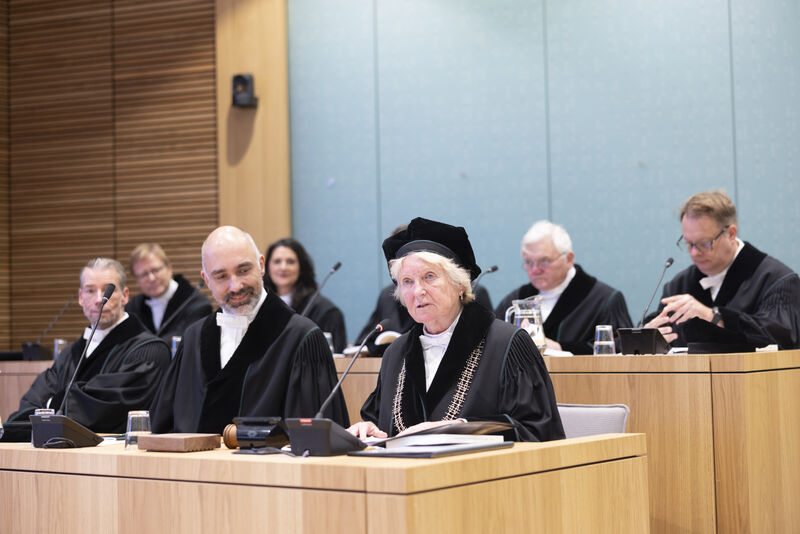
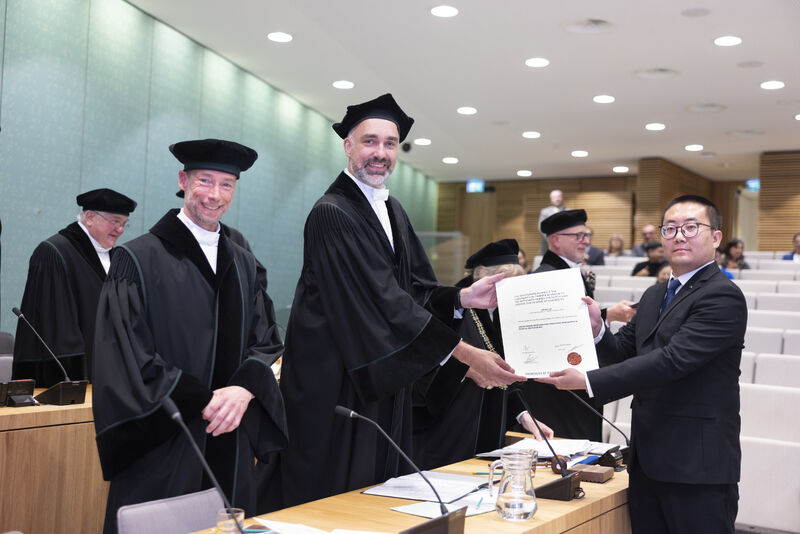
- Member of the graduation committee at the PhD defence of Yiting Liu (University of Twente): “Graph-Based Modeling for Credit Risk Assessment in Peer-to-Peer Lending”.
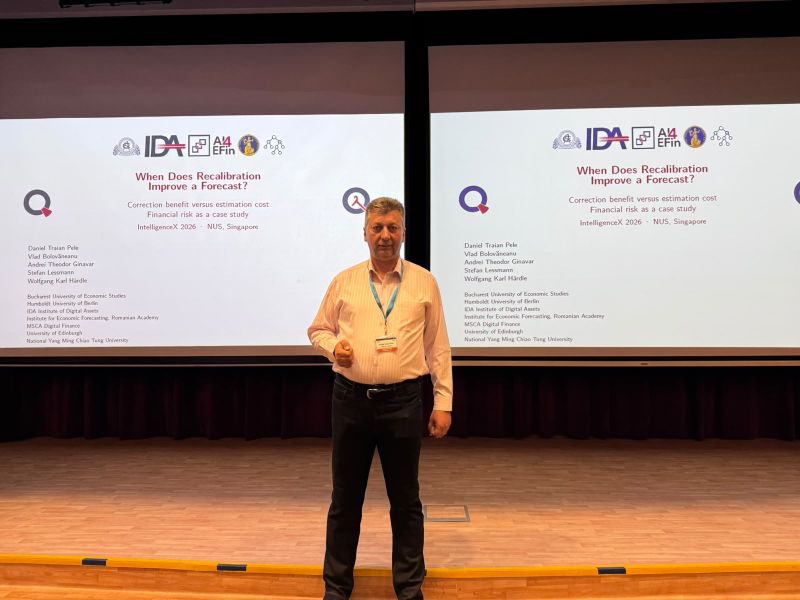
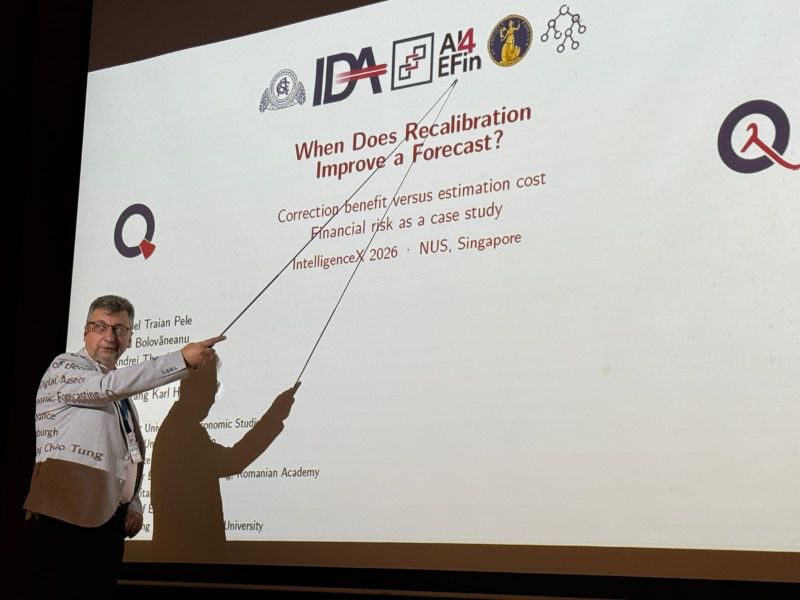
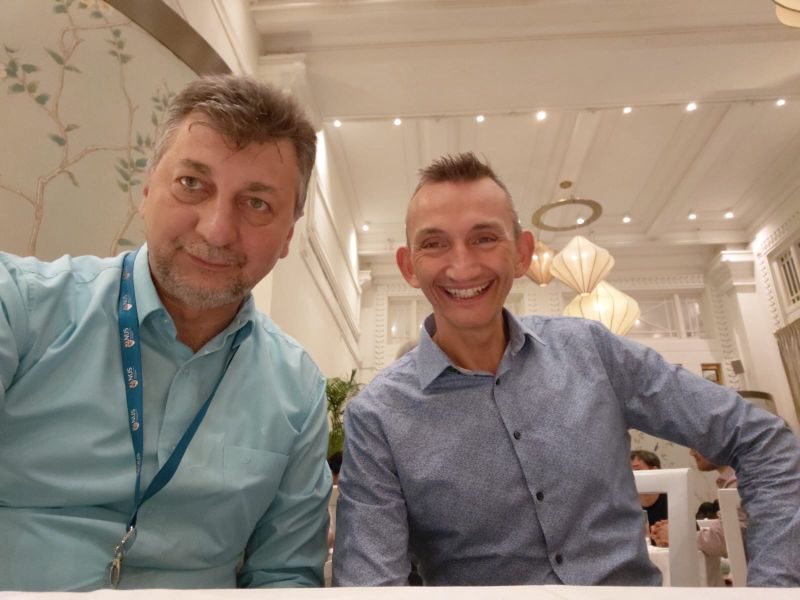
- Talk at IntelligenceX 2026 (NUS, Singapore): diagnosing and recalibrating tail-risk forecasts.
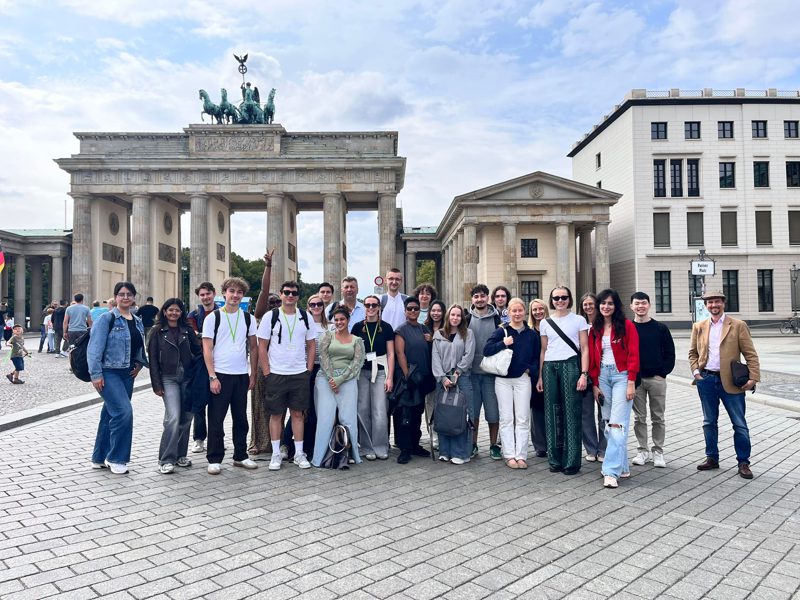
- Lecture at the HTW Berlin summer school “Data Science for Sustainable Finance and Economics”.
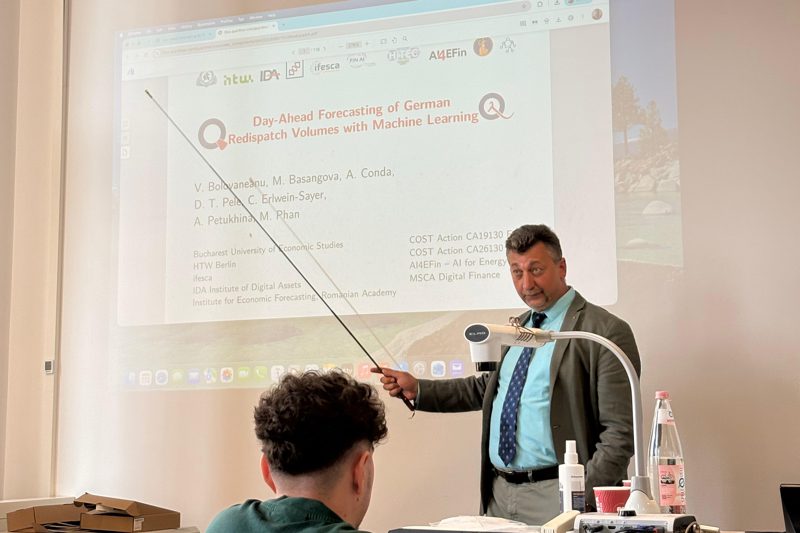
- Invited-session talk at IFCS 2026 (Milan): foundation models in risk forecasting.
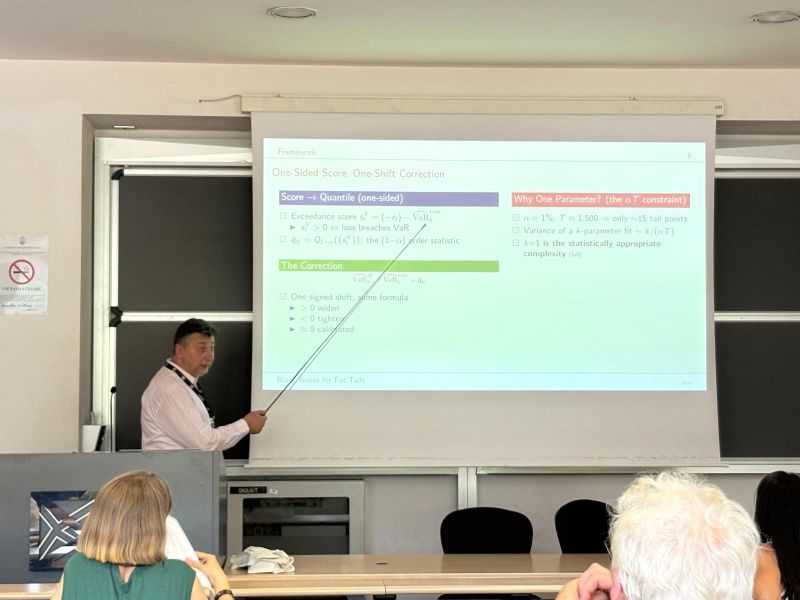
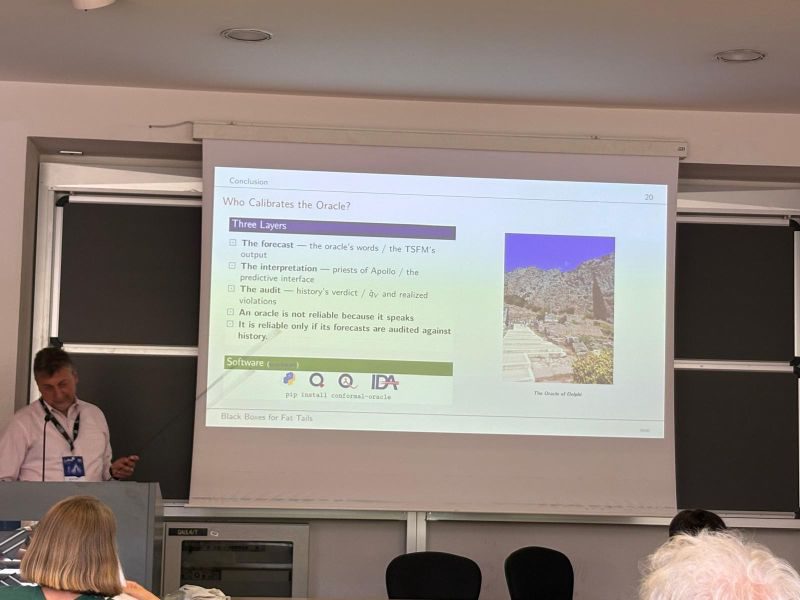
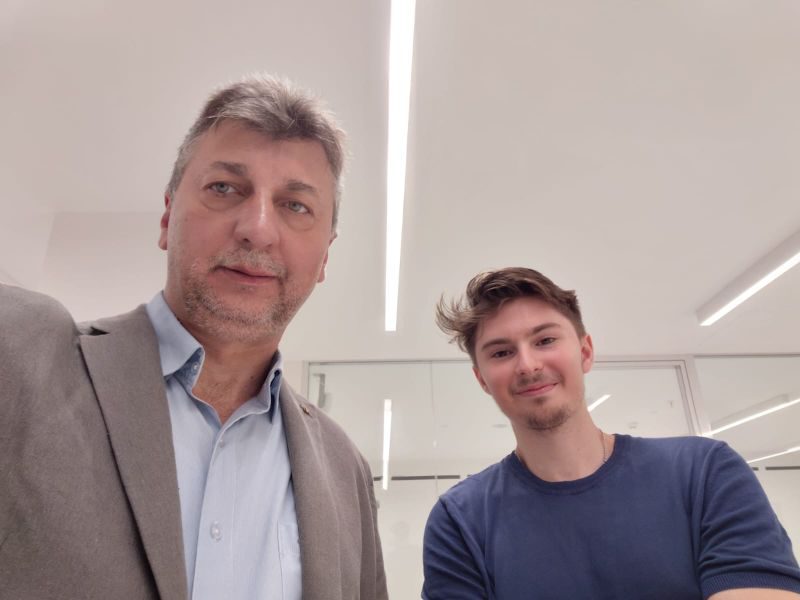
- New paper in Mathematics: “Finite-Sample Precision Limits for Expected Shortfall Forecast Comparisons”.Expected Shortfall precision depends on the effective tail sample size nα, not on n: at the 2.5% FRTB level, 250 days give about six tail observations. We turn this limit into practical diagnostics and find that roughly one in five pairwise ES rankings cannot be told apart, mostly where VaR is poorly calibrated.
- Talk at the Quantitative Finance Conference 2026 (NUS, Singapore).
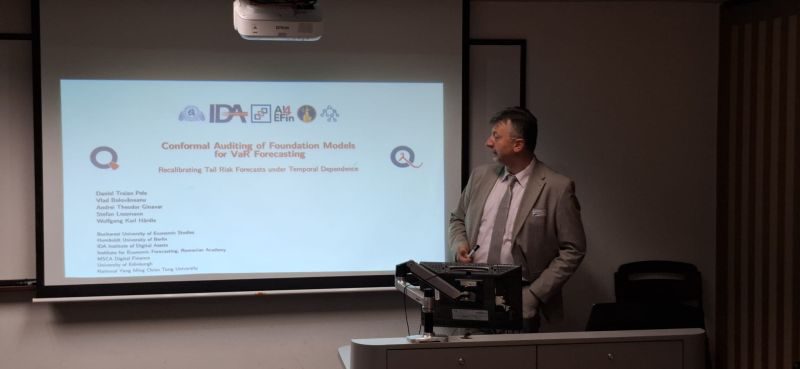
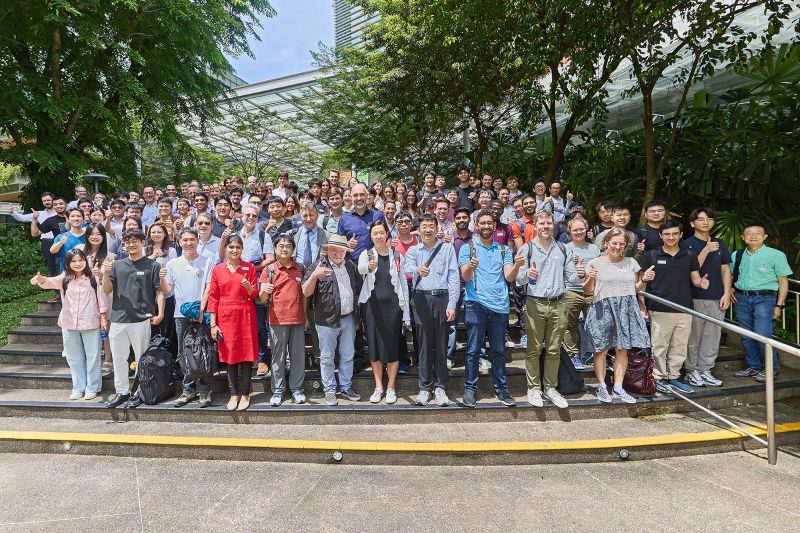
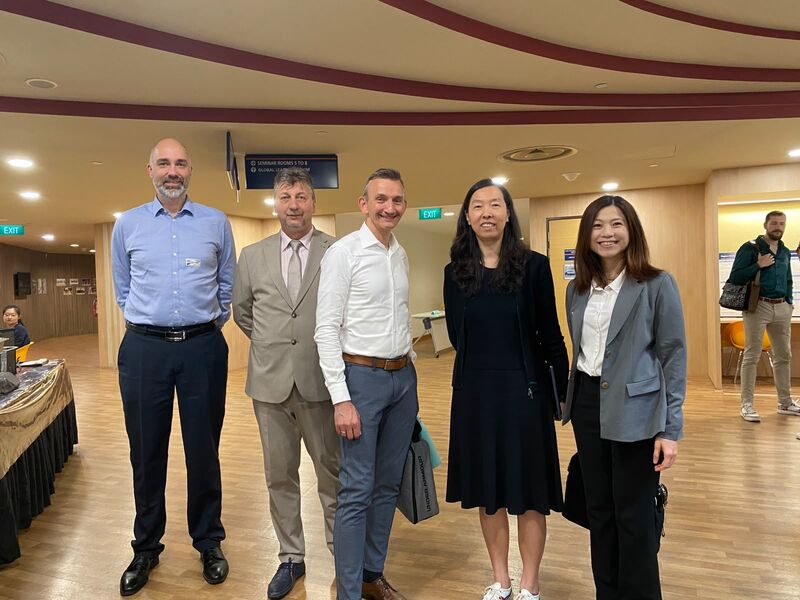
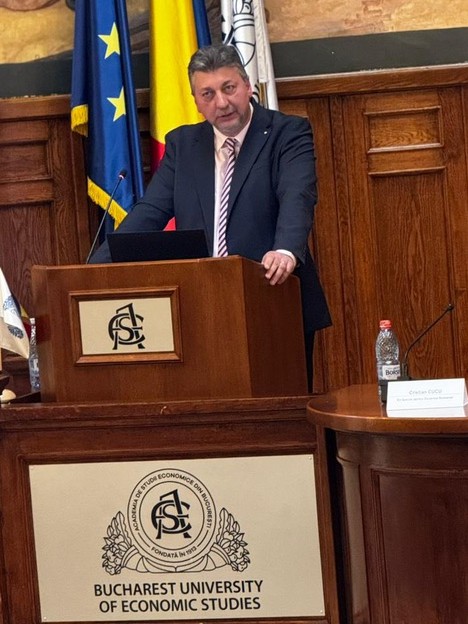
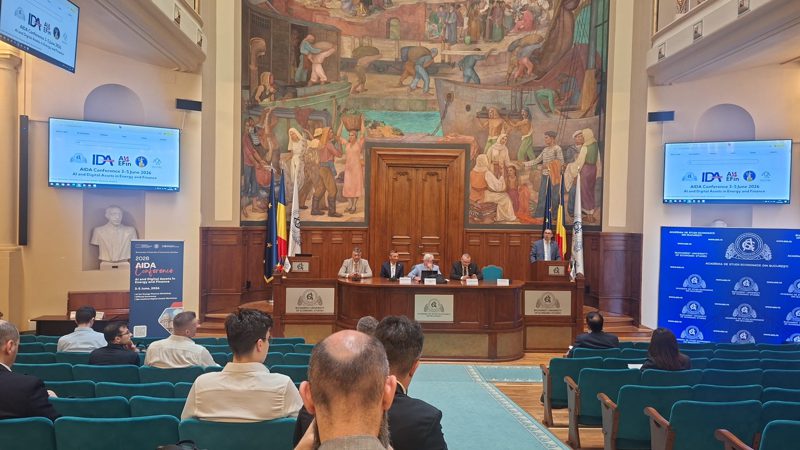
- AIDA Conference 2026: AI and Digital Assets in Energy and Finance at the Bucharest University of Economic Studies, organised with the IDA Institute Digital Assets (Prof. Wolfgang Karl Härdle) and AI4EFin (Prof. Stefan Lessmann) teams. Keynotes by Prof. Matthias Fengler, Prof. Rafał Weron and Prof. Chung-Ming Kuan; my talks on large language models for tail risk forecasting and on conformal recalibration of tail risk forecasts.
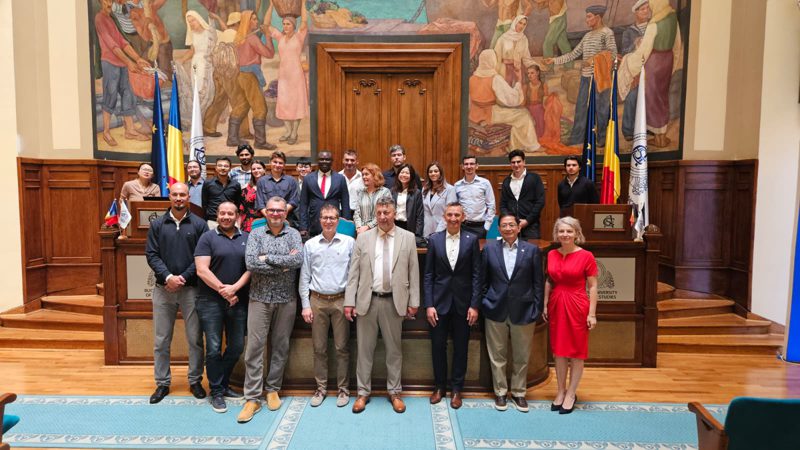
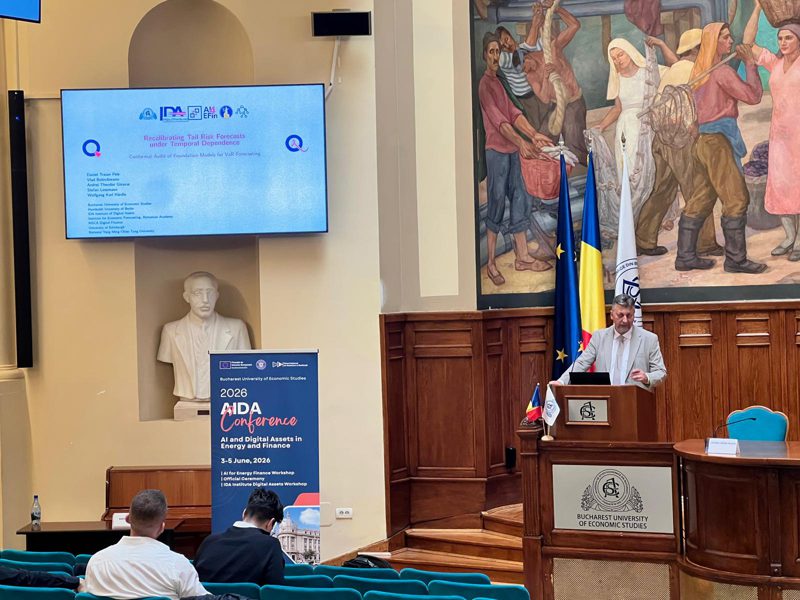
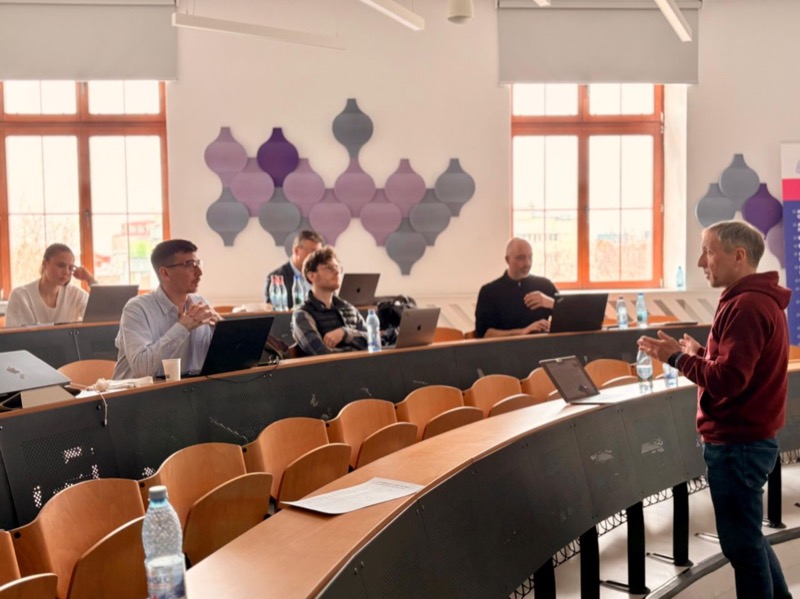
- Training Week on Blockchains in Digital Finance at the Bucharest University of Economic Studies (30 March – 3 April), within the MSCA Doctoral Network Digital Finance: AI, machine learning and blockchain analytics.
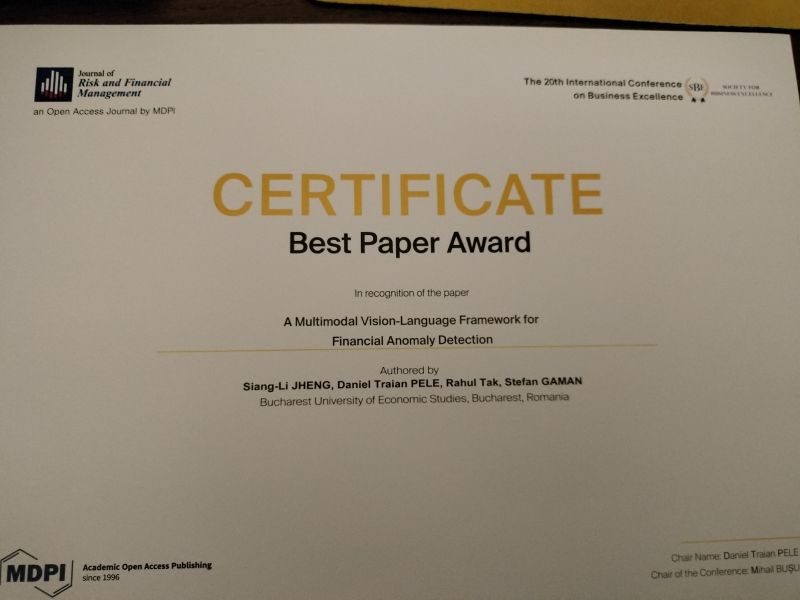
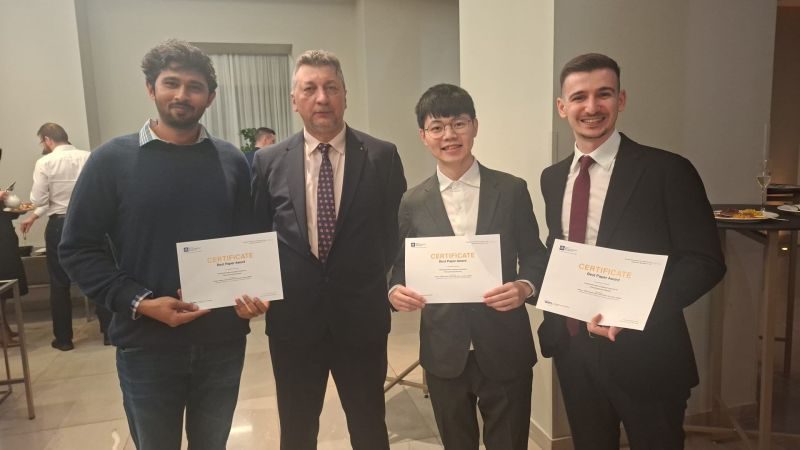
- Best Paper Award at ICBE 2026 for “A Multimodal Vision-Language Framework for Financial Anomaly Detection”.

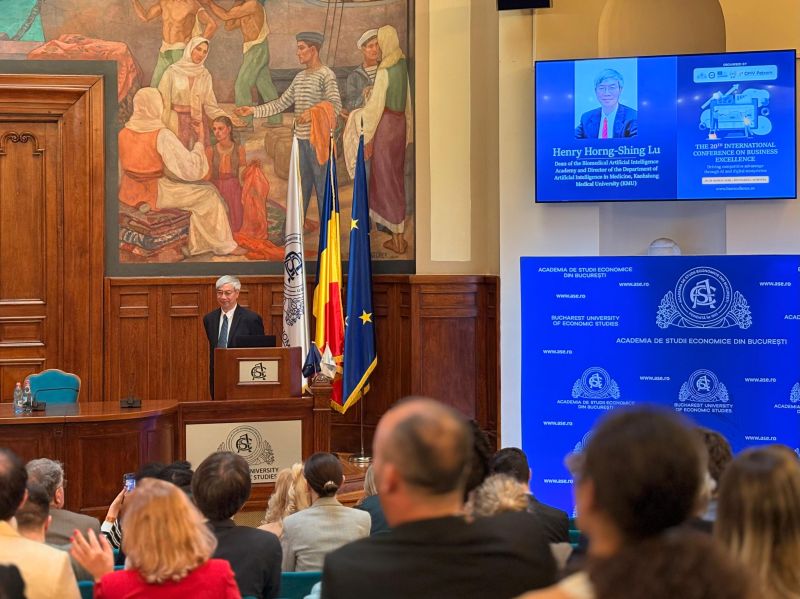
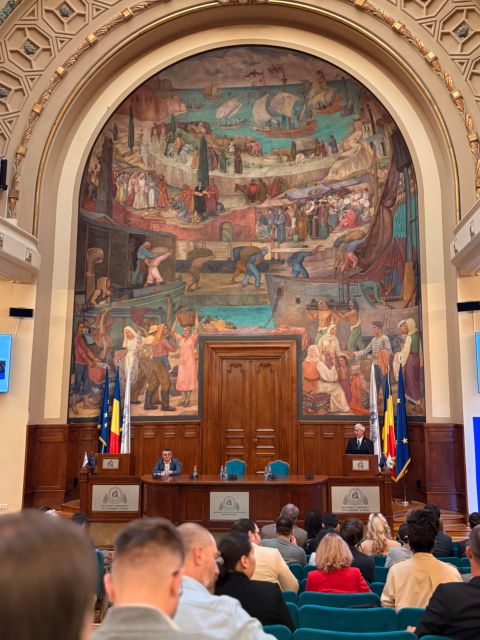
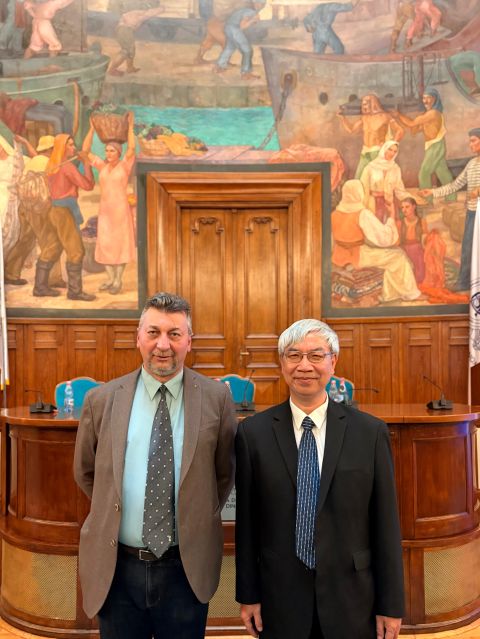
- Keynote by Prof. Henry Horng-Shing Lu (Kaohsiung Medical University), “When Doctors Meet AI”, at the 20th International Conference on Business Excellence (ICBE 2026), Bucharest.
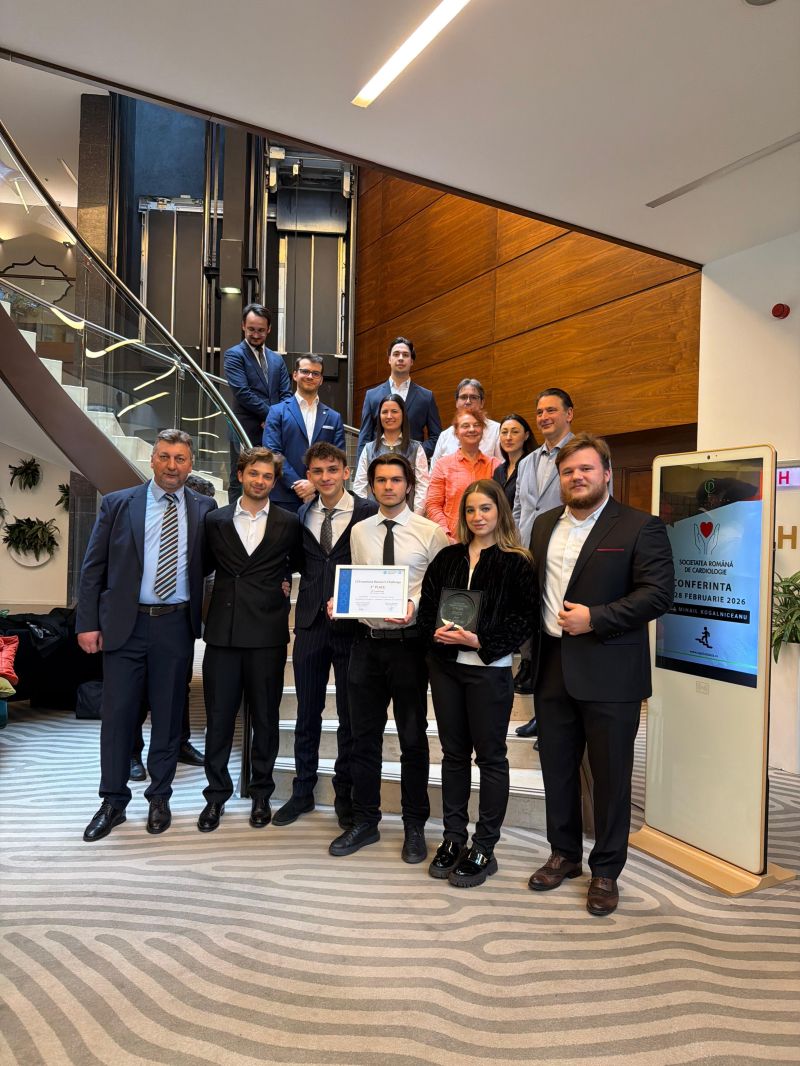
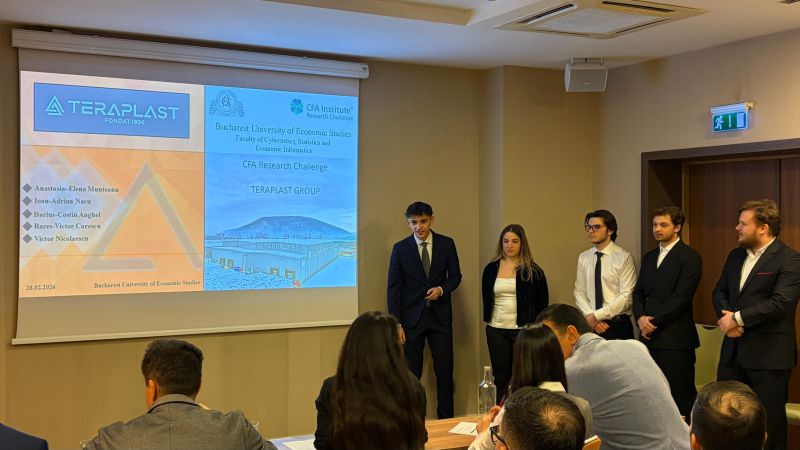
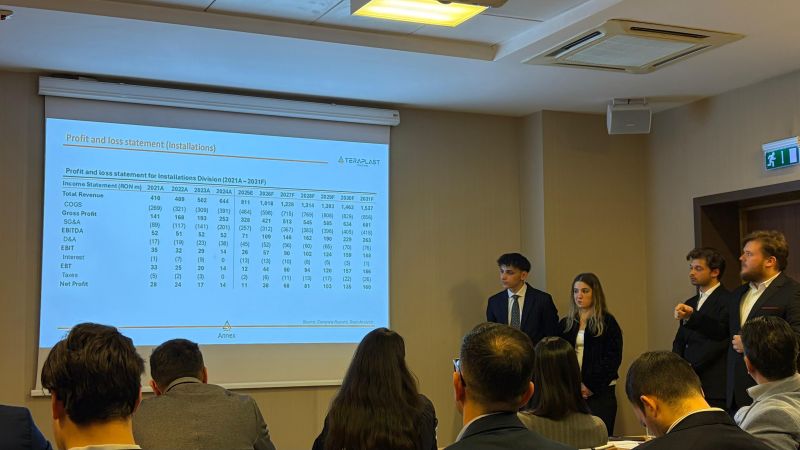
- Second place in the local round of the CFA Research Challenge for the team of the Faculty of Cybernetics, Statistics and Economic Informatics (ASE), as academic advisor.
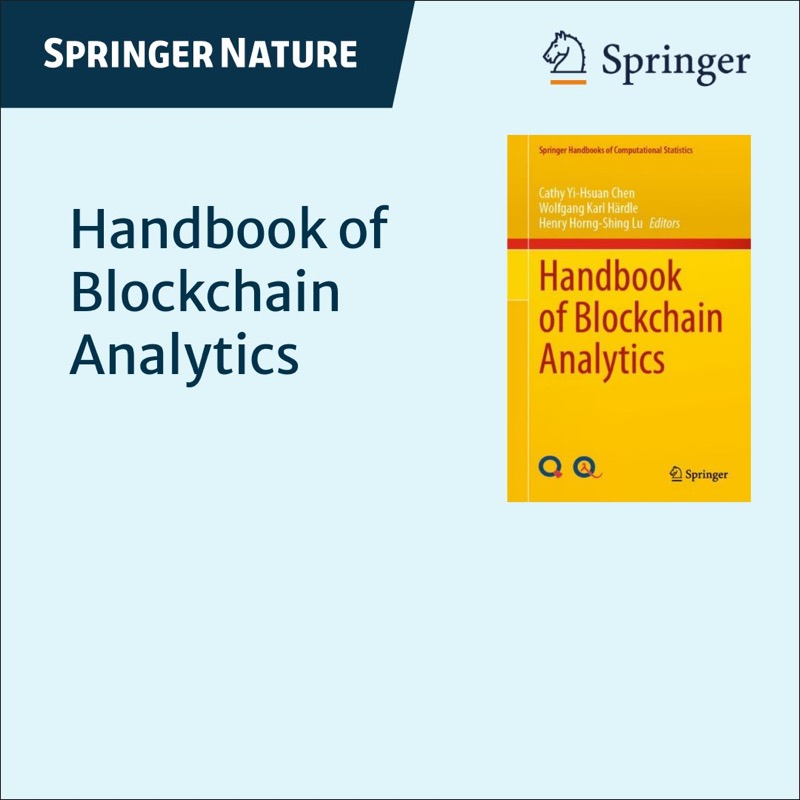
- New Springer book: Handbook of Blockchain Analytics (2026), edited by Prof. Cathy Yi-Hsuan Chen, Prof. Wolfgang Karl Härdle and Prof. Henry Horng-Shing Lu, with chapters on blockchain technology and crypto market analysis.
What I work on
Research themes
Click a theme to see the matching publications.
Highlights
Selected papers
In the beginning was the Word: LLM-VaR and LLM-ES
Large language models forecast Value at Risk and Expected Shortfall, benchmarked against classical risk models with formal backtests.
Read the paper →Can Foundation Models Manage Risk? Zero-Shot VaR and ES Forecasting with Conformal Calibration in CEE Markets
Zero-shot VaR and ES forecasts from time-series foundation models, recalibrated with conformal methods.
Read the paper →Quantlet: the code snippet knowledge platform
The Quantlet platform: every chart and table linked to runnable, citable code.
Read the paper →Are cryptos becoming alternative assets?
A statistical classification of cryptocurrencies against traditional asset classes.
Read the paper →Early warning systems for cryptocurrency markets: Predicting ‘zombie’ assets using machine learning
Machine-learning early warning for crypto-assets that turn into “zombies”.
Read the paper →BitMood: AI analysis of Bitcoin trends via Facebook emotions
Emotions in Facebook posts and their link to Bitcoin prices and trading volume.
Read the paper →Open courseware
Teaching
Open course websites with slides, seminars, notebooks, quizzes and runnable code for every chart.
Modelling Financial Markets
Econometrics of returns, volatility, tail risk, derivatives, machine learning, LLMs and foundation models for finance, on real data with reproducible code.
Statistics of Financial Markets
Returns and stylised facts, volatility, portfolio theory, VaR and Expected Shortfall, with lecture slides, seminars, Python notebooks and Quantlets.
Time Series Analysis
From exponential smoothing and ARIMA to unit roots, volatility models and forecasting evaluation, with code for every chart.
Advanced Time Series Analysis and Forecasting
Forecast evaluation, structural identification, state space and regime models, volatility and risk, machine learning, foundation models and causal inference, applied to real data in Python.
Blockchain Applications
Two parts: Crypto Economics (Prof. Ilan Alon), with business cases and a due-diligence project, and Blockchain Analytics: the statistics of crypto markets, from volatility and tail risk to stablecoin depegs, networks and machine-learning forecasts, with Colab notebooks.
Energy Markets Quantitative Analysis
Seven lectures on real European energy data: day-ahead electricity price forecasting, volatility, risk for energy companies, derivatives and hedging, renewables, negative prices and batteries, machine learning and foundation models; case studies, Colab notebooks and a team project.
Neural Networks and Deep Learning
Fourteen lectures from the perceptron to transformers, graph neural networks, reinforcement learning, language and foundation models, on real financial and energy data; seven research case studies, Colab notebooks, quizzes and a team project.
Statistics of Financial Markets: code
SAS, R and Python code for the statistics of financial markets.
Also taught: Statistics, Econometrics, Advanced Time Series Modelling; supervision of bachelor, master and doctoral theses.